prochaines dates de cours reiki
Reiki Formation, le Reiki enseigné en toute simplicité
Qu'est-ce que le Reiki ?
Le Reiki est l'énergie universelle de vie à la source même de toute forme de vie dans l'univers. Seul le nom change selon les cultures et traditions : Les Chinois l'appellent Chi, les Chrétiens Lumière ou Esprit Saint, les Hindous parlent du Prana, les Égyptiens du Ka et les Sioux de Wakonda.

Le Reiki : bref historique
Le Reiki a été élaboré au Japon par Mikao Usui (1865-1926) suite à une longue quête personnelle il y a de cela un siècle. Il est composé des mots "Rei" représentant l'essence de la source existant en toute chose et "Ki" signifiant énergie vitale. Chujiro Hayashi (1880-1940) a contribué à faire connaître le Reiki au Japon et Hawayo Takata (1900-1980) l'a ensuite largement diffusé dans le monde.
Le Reiki est un art de vivre, une initiation au bonheur. Il est un chemin qui nous mène par des voies souvent insoupçonnées. Le Reiki est simple et accessible à tous. Il n'impose rien, si ce n'est une totale liberté. Le Reiki est au-delà des cultures, des dogmes, des croyances et des religions, pleinement compatible avec chaque être humain sur cette terre.
Transmission et effets du Reiki
La transmission se fait localement ou sous forme de traitement Reiki complet par l'apposition des mains sur le corps du receveur. Le donneur opère en tant que canal énergétique et ne pratique aucune manipulation physique. Il laisse simplement circuler l'énergie qui purifie et harmonise le receveur à tous les niveaux de son être (physique, émotionnel, mental et spirituel). L'énergie se dirige d'elle-même vers les zones qui en ont besoin. Un soin Reiki n'a donc rien de cérébral.
Les effets lors d'un traitement peuvent être perçus comme une profonde relaxation, des sensations de chaleur, parfois très intenses ou des picotements.
Le Reiki n'éradique pas directement les symptômes physiques, mais libère les causes originelles des blocages, douleurs ou maladies. Le Reiki ne remplace bien entendu pas un traitement médical, mais le renforce dans la majeure partie des situations. Il est cependant complémentaire à toute autre forme de thérapie et s'avère être un merveilleux moyen pour se libérer du stress quotidien, des tensions corporelles, afin de retrouver ses pleines capacités.

Le Reiki : pour qui ? pour quoi ?
Le Reiki n'est pas à l'exclusivité des êtres humains et peut être dispensé à toute forme de vie, qu'elle soit animale, végétale ou minérale, ainsi qu'aux aliments, boissons et médicaments que nous sommes amenés à ingérer. A l'aide de symboles enseignés au deuxième degré/niveau, il permet également de traiter une situation, une habitation ou un lieu. Le Reiki est une méthode de guérison énergétique qui ne s'apparente à aucune secte ou mouvement religieux et n'impose aucun système de croyances. Cette liste de questions-réponses sur le thème du Reiki vous éclairera sans doute dans vos nombreuses interrogations. Au-delà de toutes les informations que vous trouverez sur ce site, je rappelle que le Reiki n'est pas à comprendre, mais à découvrir de l'intérieur, par les sens, et je vous y invite à travers les différents stages d'initiation proposés.
L'enseignant et les formations certifiantes
Je m'appelle André Baechler, j'accompagne des personnes en fin de vie et j'enseigne depuis 19 ans tous les degrés/niveaux de Reiki ainsi que la maîtrise Reiki à Villars-sur-Glâne, petite ville de l'agglomération de Fribourg située proche de Bulle, Romont, Lausanne, Berne, Morat, Payerne et Neuchâtel. Allergique à toute forme de dépendance, ma motivation d'enseignant Reiki est d'offrir à qui le souhaite, un outil personnel à la fois simple et puissant, procurant un peu plus d'autonomie au quotidien. Les stages de formation Reiki que je propose ont lieu en petits groupes et accueillent des participant(e)s de tous milieux socioprofessionnels venant principalement de Suisse romande et de France voisine.
Un certificat nominatif (diplôme) et un support de cours sont remis aux participants à l'issue de chaque degré/niveau de formation Reiki. Si nécessaire par la suite, je reste à l'écoute de chacun afin de partager, conseiller et répondre à tous les questionnements pouvant survenir consécutivement à un stage de Reiki, que ce soit par téléphone ou sous forme de rencontre individuelle. Ma disponibilité dans le cadre d'un suivi n'occasionne bien évidemment aucun frais supplémentaire.

Activités et coronavirus COVID
Les activités ont lieu actuellement, en conformité avec les directives fédérales et cantonales en vigueur.
Prochains stages Reiki et soirées de partage
Vous pouvez consulter ci-dessous la liste des prochains cours de formation Reiki. Si le coeur vous en dit, un simple clic sur le cours de votre choix vous donnera accès au formulaire d'inscription en ligne.
- Cours Reiki 1er degré / niveau 1
- Cours Reiki 2ème degré / niveau 2
-
Cours 3ème degré / niveau 3
Dispensé sous forme de stage individuel sur un jour.
convenir d'une date - plus d'informations sur cet enseignement
-
Formation à la maîtrise Reiki
Vous disposez d'une bonne pratique du Reiki et souhaitez vous engager sur le chemin de l'enseignement ? Si tel est votre souhait, je vous y accompagne volontiers. N'hésitez pas à me contacter afin que nous en parlions.
-
Soirée de rencontre et partage
Ouverte à toutes et tous, la prochaine soirée aura lieu le mercredi 15 mai 2024 à 19h30.
plus d'informations à ce sujet
- Consultez la liste des prochains événements.
L'espace dédié à l'enseignement du Reiki

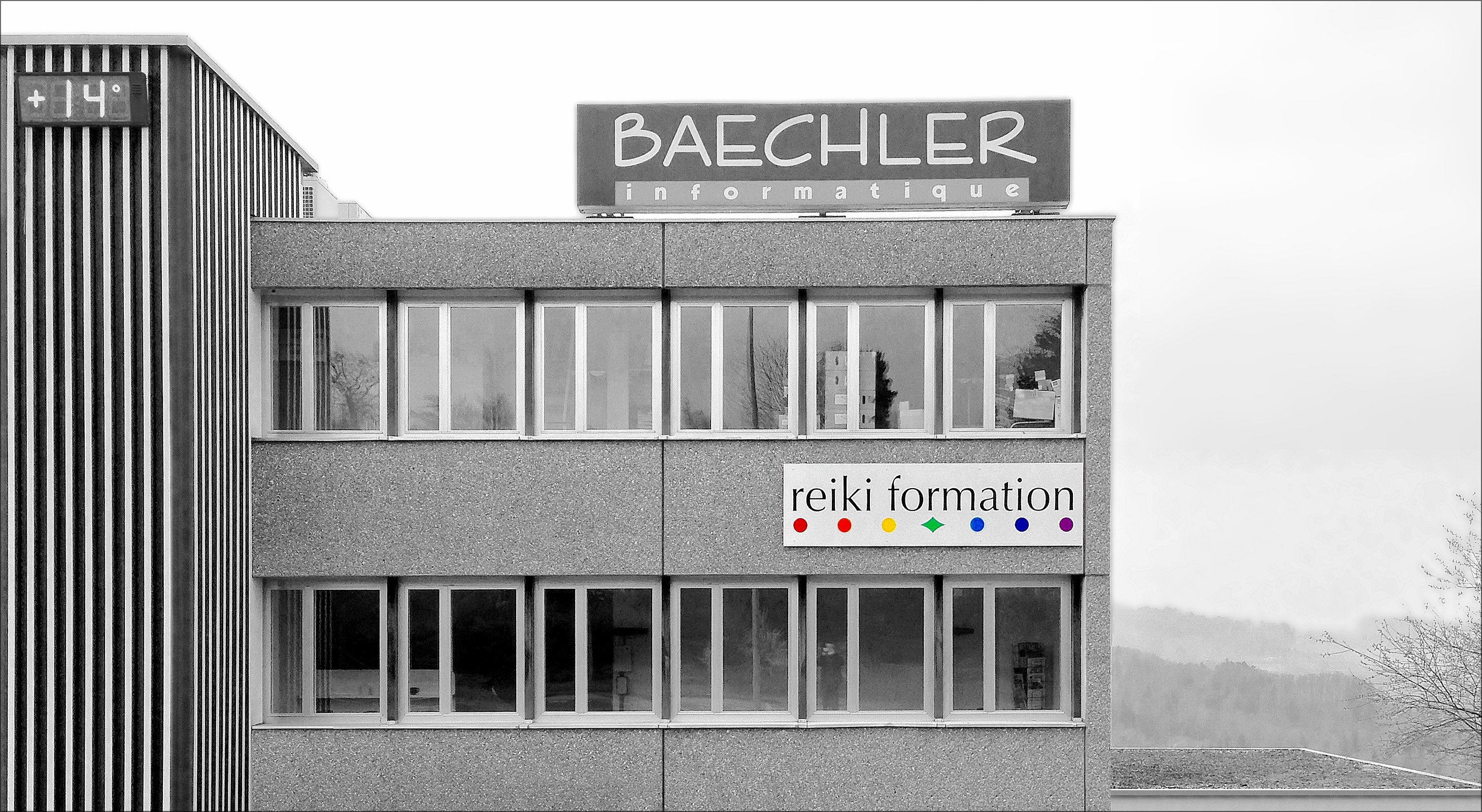
La grande baie vitrée orientée plein sud surplombe les falaises de la Sarine, en plein coeur de la nature. Un peu hors du temps, cet espace d'accueil aux couleurs chaudes est propice au ressourcement et à l'intériorisation. L'endroit est exclusivement consacré au Reiki, à sa pratique et à son enseignement. L'accès est très simple, que ce soit par la route, le train, le bus ou les sentiers pédestres. Les places de parc sont disponibles en suffisance devant le bâtiment, avec possibilité de recharge pour véhicule électrique jusqu'à 11 ou 22 kW (connecteur de type 2). Si vous n'habitez pas la région de Fribourg, vous trouverez une liste des hébergements possibles à proximité du lieu de stage Reiki.
 4.9/5 - 384 évaluations
Merci d'avoir évalué cette page